
Life After Lymphoma Treatment — Recovery, Diet & Follow-Up Care
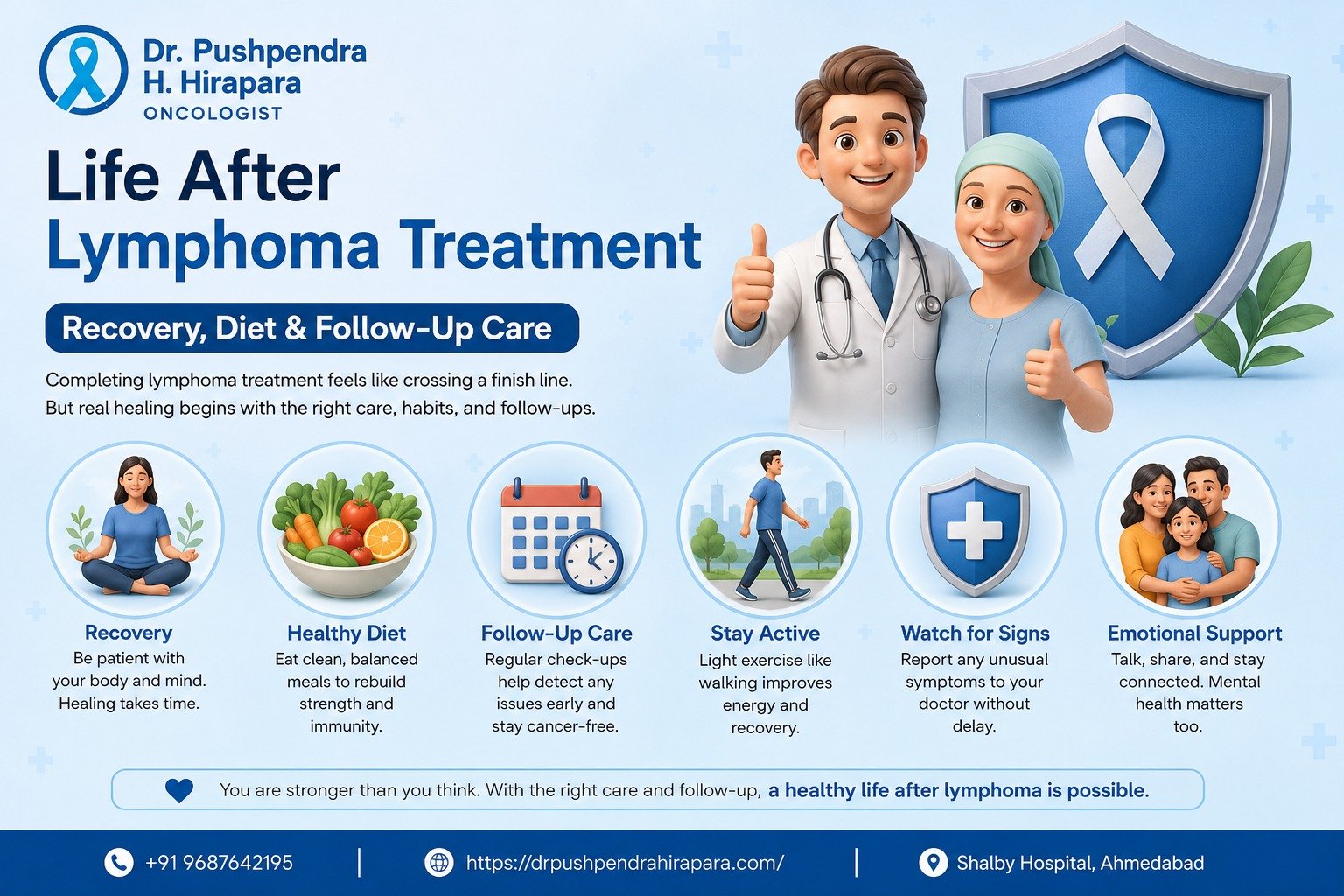
Completing lymphoma treatment feels like crossing a finish line. But for many patients, the first question after treatment is — “What do I do now?”
Recovery does not happen overnight. It is a gradual process that involves your body, your mind, and your daily habits. This guide will walk you through what to expect and how to take care of yourself once the main treatment is over.
What Recovery Actually Feels Like
Every patient’s recovery journey is different. Some feel better within weeks. For others, it takes several months.
Common experiences after lymphoma treatment include:
- Fatigue— This is the most reported issue. Your body has been through a lot. Rest when you need to.
- Weak immunity— Avoid crowded places and contact with sick people in the initial months
- Low blood counts— Regular blood tests will track your recovery
- Emotional changes— Anxiety, mood swings, and fear of relapse are completely normal
- Hair regrowth— If hair was lost during chemotherapy, it usually starts growing back within 3 to 6 months
The important thing is — do not rush yourself. Healing takes time, and that is okay.
Diet After Lymphoma Treatment — Keep It Simple
You do not need a complicated diet chart. Just focus on clean, wholesome food that supports your body’s recovery.
Include in your daily meals:
- Fresh fruits and vegetables — especially orange, yellow, and green coloured ones
- Whole grains — oats, brown rice, whole wheat roti
- Good protein sources — dal, eggs, paneer, fish, lean chicken
- Nuts and seeds in small amounts — almonds, walnuts, flaxseeds
- Plenty of water — at least 8 to 10 glasses daily
Avoid or reduce:
- Packaged, processed, or junk food
- Sugary drinks and sweets
- Raw or undercooked meat and eggs (infection risk)
- Alcohol — completely if possible
Small and frequent meals are better than large, heavy ones, especially if the appetite has not fully returned yet. If you are unsure about your specific diet, always ask your doctor or a registered dietitian.
Follow-Up Care — The Step Most People Skip
Many patients feel that once treatment ends, doctor visits can stop. This is one of the biggest mistakes in lymphoma recovery.
Regular follow-up care is essential because:
- It helps detect any signs of lymphoma returningat the earliest stage
- It monitors long-term side effectsof chemotherapy or radiation
- It tracks your blood counts, organ function, and overall health
- It gives you a chance to discuss emotional health with your doctor
Typical follow-up schedule:
- First 2 years — every 3 to 6 months
- Years 3 to 5 — every 6 to 12 months
- After 5 years, once a year, lifelong
Your doctor may also recommend PET scans or CT scans at certain intervals to confirm there are no signs of cancer returning.
Never skip a follow-up appointment. If lymphoma does return, early detection gives much better treatment outcomes.
Daily Habits That Speed Up Recovery
Simple lifestyle changes can make a big difference during this phase:
- Walk daily— Start with 15 to 20 minutes and slowly increase
- Sleep well— 7 to 8 hours of proper sleep every night
- Avoid smoking— It significantly increases the risk of cancer returning
- Stay connected— Talk to family, friends, or a counsellor about how you feel
- Stay informed — Know the signs of relapse and do not ignore them
Warning Signs — When to Call Your Doctor Right Away
Contact your doctor immediately if you notice:
- Fever above 100°F that does not go down
- Swollen lymph nodes in the neck, underarm, or groin
- Sudden or unexplained weight loss
- Night sweats returning
- Extreme tiredness that does not get better with rest
- Any new or unusual pain
Do not wait and watch. When it comes to lymphoma, early action always matters.
Long-Term Health After Lymphoma
Some survivors experience long-term effects months or even years after treatment — such as thyroid problems, heart sensitivity, nerve issues, or a higher chance of certain infections. This is why annual health check-ups are recommended for life, not just during the first few years.
Your doctor will build a personalised care plan based on the type of lymphoma you had, what treatment was given, and your current health status.
Consult a Specialist in Ahmedabad
Recovery after lymphoma is not a one-size-fits-all journey. Having the right doctor by your side makes a real difference — someone who knows your history, understands your concerns, and guides you at every step.
Dr. Pushpendra Hirapara is a leading oncologist offering personalised Lymphoma Cancer Treatment in Ahmedabad. Whether you are in the middle of treatment or planning your recovery, Dr. Hirapara and his team provide compassionate, evidence-based care tailored to each patient.