
Can I Breastfeed After Breast Cancer Treatment?
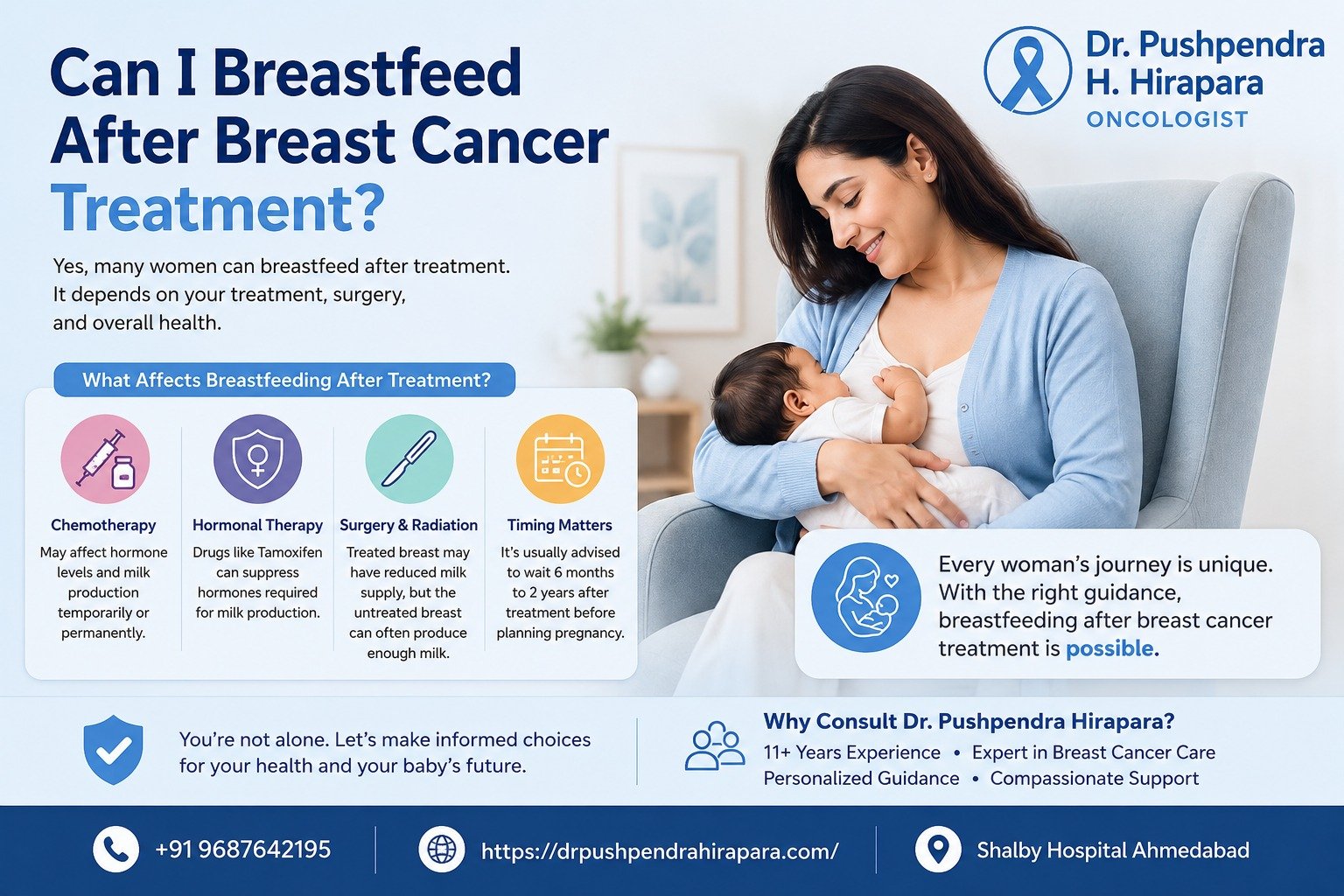
For young women who have gone through breast cancer treatment, the question of whether they can breastfeed in the future is deeply personal — and entirely valid. Many women are diagnosed with breast cancer in their thirties or even earlier, before they have completed their families. Once treatment is over and recovery is underway, the thought of pregnancy and breastfeeding naturally comes up. The answer is not a simple yes or no — it depends on the type of treatment received, the breast tissue that remains, and the individual’s hormonal status after treatment. If you are navigating life after breast cancer treatment in Ahmedabad, here is what the current evidence and clinical experience suggest.
Why Breast Cancer Treatment Affects Breastfeeding
Breast cancer treatment typically involves one or more of the following: chemotherapy, targeted therapy, hormonal therapy, immunotherapy, or surgery followed by radiation. Each of these can affect the body’s ability to produce and supply breast milk in different ways.
Chemotherapy: High-dose chemotherapy drugs can affect the ovaries and disrupt hormone production. This may temporarily or, in some cases, permanently affect fertility and hormonal balance — both of which play a role in milk production after childbirth.
Hormonal therapy: Treatments like tamoxifen or aromatase inhibitors are often prescribed for hormone receptor-positive breast cancer and can run for five to ten years. These drugs actively suppress oestrogen, which is a key hormone involved in milk production. Breastfeeding is not possible while on these medications, and the duration of treatment means that for many women, pregnancy and breastfeeding are delayed until therapy is complete.
Targeted therapy: Drugs used in HER2-positive breast cancer treatment are generally not safe during pregnancy, and their long-term effects on milk glands are still being studied.
Surgery and radiation: Depending on how much breast tissue is removed and whether radiation was directed at the breast, the milk-producing glands in the treated breast may have reduced capacity or may not produce milk at all. The untreated breast, however, often retains the ability to produce milk normally.
Can You Breastfeed After Treatment Is Complete?
For many women, breastfeeding after breast cancer treatment is possible — but it is rarely straightforward, and the outcome depends on several factors.
If only one breast was treated, women often can breastfeed from the untreated breast. Research shows that the untreated breast can compensate and produce enough milk to fully nourish a baby in many cases, though this varies from person to person.
For the treated breast, milk production depends on how much functional glandular tissue remains after surgery and whether radiation was involved. Radiation in particular can reduce the tissue’s ability to produce milk significantly, though some women do manage partial production.
One important consideration is timing. Most oncologists recommend waiting at least six months to two years after completing treatment before attempting pregnancy — and in cases involving hormonal therapy, the wait may be longer. This is to allow the body to stabilise, reduce recurrence risk during the vulnerable post-treatment window, and ensure that any pregnancy does not interfere with ongoing treatment.
What About Chemotherapy and Milk Safety?
This is a critical point — and one that many women want clarity on. Breastfeeding during active chemotherapy is not safe. Chemotherapy drugs pass into breast milk and can be harmful to a nursing infant. The same applies to most targeted therapies and hormonal treatments.
Once treatment is fully complete and your oncologist confirms it is safe, the question of breastfeeding can be revisited. Your doctor will review your specific treatment history and current health before giving clearance.
Fertility After Breast Cancer Treatment — The Bigger Picture
Breastfeeding is connected to fertility, and many women ask about both together. Chemotherapy — particularly certain regimens used in breast cancer — can affect ovarian function. Some women experience temporary menopause during treatment, while others may face permanent fertility challenges depending on their age, the drugs used, and the doses received.
If preserving fertility was a concern before treatment began, options like egg freezing or embryo preservation may have been discussed. If not, a fertility specialist can evaluate current ovarian reserve and advise on the possibilities moving forward.
The good news is that many women who complete breast cancer treatment do go on to have healthy pregnancies. Studies have not shown that pregnancy after breast cancer increases recurrence risk — in fact, some data suggest it may be safe or even beneficial for certain groups of patients.
Questions to Discuss With Your Oncologist
If breastfeeding and future pregnancy are on your mind after breast cancer treatment, here are the key questions to raise during your next consultation:
- How long should I wait after completing treatment before considering pregnancy?
- Is it safe to pause hormonal therapy temporarily if I want to try for a pregnancy?
- What is my current fertility status, and should I see a reproductive specialist?
- Can I breastfeed from the untreated breast, and what can I realistically expect from the treated side?
- Are there any signs of recurrence I should watch for during a future pregnancy?
These conversations are important to have early — ideally before treatment ends — so that planning can begin with full information.
Emotional Aspects of This Decision
The desire to breastfeed is not just physical — it is deeply emotional for many mothers. Women who have been through breast cancer treatment may feel grief, uncertainty, or pressure around this topic. It is important to acknowledge that not being able to breastfeed, or breastfeeding in a limited capacity, does not make anyone a lesser mother. Bonding with a baby happens in many ways, and formula-fed babies thrive just as well.
If you are struggling with these emotions, speaking with a counsellor who has experience with cancer patients can be genuinely helpful — as can connecting with other women who have navigated pregnancy and motherhood after breast cancer.
Getting the Right Guidance
Every woman’s breast cancer journey is different — the type of cancer, the treatment received, the age at diagnosis, and the current hormonal status all shape what breastfeeding looks like after treatment. There is no single answer that applies to everyone.
Dr. Pushpendra Hirapara is a DrNB-qualified medical oncologist in Ahmedabad with over 11 years of experience in managing breast cancer through chemotherapy, targeted therapy, hormonal therapy, and immunotherapy. For women with questions about life after breast cancer treatment in Ahmedabad — including fertility, pregnancy, and breastfeeding — a detailed consultation with a medical oncologist who understands your full treatment history is the right starting point.