
Can Smoking or Alcohol Increase Head and Neck Cancer Risk?
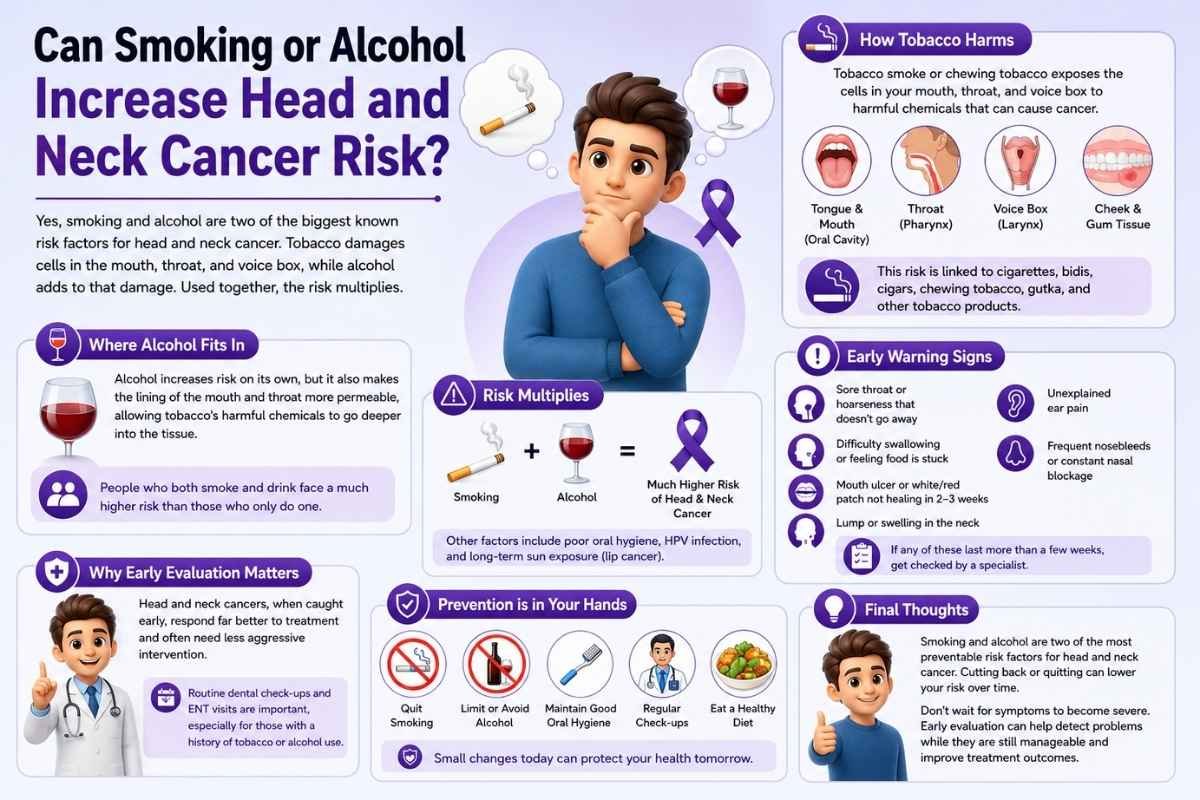
Yes, smoking and alcohol are two of the biggest known risk factors for head and neck cancer. Tobacco use, whether smoked or chewed, damages the cells lining the mouth, throat, and voice box, while regular alcohol consumption adds to that damage. Used together, the risk multiplies rather than simply adding up. If you’ve been putting off a check-up because of habits like these, this is worth a proper read.
Many people search for head and neck cancer treatment in Ahmedabad only after symptoms show up. But understanding what causes these cancers in the first place can help you catch warning signs early, or better yet, avoid them altogether.
How Tobacco Damages the Mouth and Throat
Every time tobacco smoke or chewing tobacco touches the lining of your mouth, throat, or voice box, it exposes those cells to harmful chemicals. Over years, this repeated exposure can cause changes at the cellular level that eventually turn cancerous. This is true whether someone smokes cigarettes, bidis, or uses chewing tobacco and gutka; both are linked to a higher risk of oral and throat cancers.
Smoking doesn’t just affect the lungs. It’s directly tied to cancers of the:
- Tongue and mouth (oral cavity)
- Voice box (larynx)
- Throat (pharynx)
- Cheek and gum tissue
Where Alcohol Fits Into the Picture
Alcohol on its own increases risk, but it also acts almost like a “helper” for tobacco’s harmful effects. It can make the lining of the mouth and throat more permeable, allowing tobacco’s cancer-causing chemicals to penetrate deeper into the tissue. This is why people who both smoke and drink regularly face a much higher combined risk than those who only do one or the other.
Poor oral hygiene, HPV infection, and long-term sun exposure (particularly for lip cancer) are other known contributors, but tobacco and alcohol remain the two most preventable and controllable risk factors.
Early Warning Signs You Shouldn't Ignore
If you smoke, drink regularly, or have done so in the past, keep an eye out for:
- A sore throat or hoarseness that doesn’t go away
- Difficulty swallowing, or a feeling that food is stuck
- A mouth ulcer or white/red patch that hasn’t healed in 2–3 weeks
- A lump or swelling in the neck
- Unexplained ear pain
- Frequent nosebleeds or constant nasal blockage
None of these symptoms automatically mean cancer, but if any of them last more than a few weeks, it’s worth getting checked rather than waiting it out.
Why Early Evaluation Matters
Head and neck cancers, when caught early, respond far better to treatment and often need less aggressive intervention. This is one reason routine dental check-ups and ENT visits matter more than people realize, especially for those with a history of tobacco or alcohol use.
Dr. Pushpendra H. Hirapara, a Medical Oncologist with over 11 years of clinical experience and more than 13,000 tests and treatments completed, currently consults at Shalby Hospital across SG Highway and Naroda in Ahmedabad. His approach relies on multidisciplinary tumor board discussions, so every diagnosis is reviewed carefully before a treatment plan is decided. For anyone exploring head and neck cancer treatment in Ahmedabad, this kind of collaborative, evidence-based evaluation makes a real difference in outcomes.
Final Thoughts
Smoking and alcohol are two of the most preventable risk factors linked to head and neck cancer, and cutting back or quitting altogether genuinely lowers your risk over time. If you have a history of either habit, don’t wait for symptoms to become severe before seeing a specialist. Early evaluation for head and neck cancer treatment in Ahmedabad could make all the difference in catching problems while they’re still manageable.